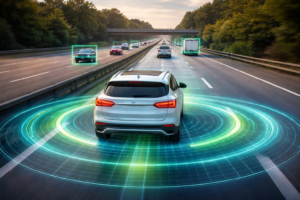
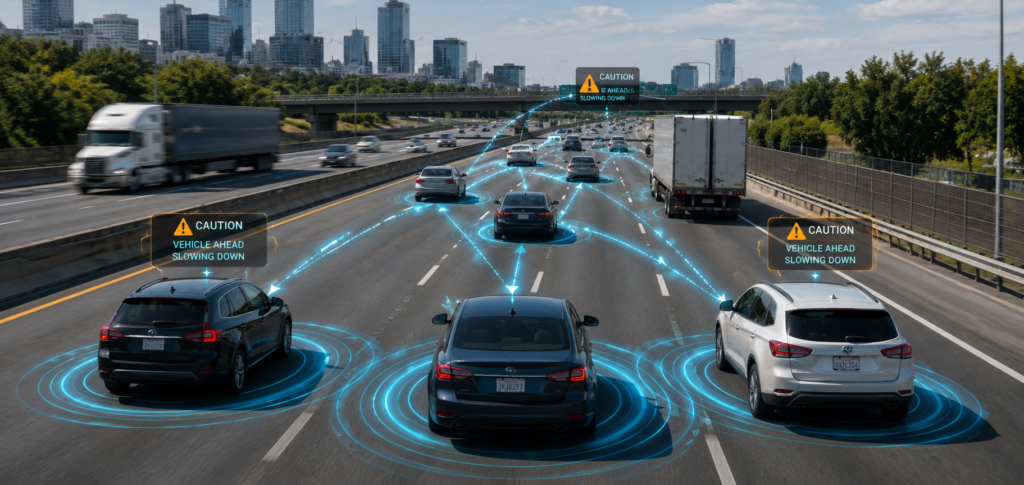
Connected vehicle technology is gaining attention across the automotive industry in 2026. One of the most promising developments is vehicle-to-vehicle communication, often called V2V communication. This technology allows vehicles to exchange information about their speed, position, direction, and braking activity in real time. By sharing this data instantly, vehicles can warn drivers about potential hazards before they become visible.
As traffic volumes increase and roads become more complex, vehicle-to-vehicle communication is emerging as a tool that could help reduce crashes and improve overall road safety. While many drivers are familiar with features such as blind-spot monitoring and automatic emergency braking, V2V communication takes safety a step further by allowing vehicles to cooperate with one another.
If you enjoyed our article about distracted driving risks, this emerging technology represents another major advancement in accident prevention.
What Is Vehicle-to-Vehicle Communication?
Vehicle-to-vehicle communication is a wireless technology that enables cars to exchange information with nearby vehicles. Rather than relying solely on cameras, radar, or sensors mounted on the vehicle itself, connected vehicles receive information directly from surrounding vehicles.
For example, if a vehicle several cars ahead suddenly brakes, connected vehicles farther back can receive that information instantly. This may provide drivers with additional reaction time compared to traditional visual cues.
According to the National Highway Traffic Safety Administration, connected vehicle technology has the potential to address many common crash scenarios involving human error.
How the Technology Works
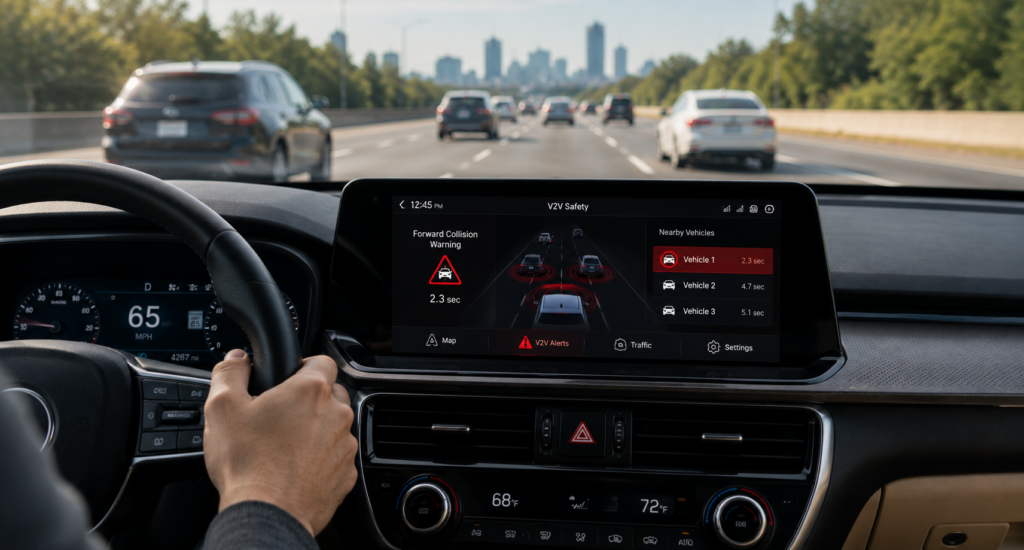
Vehicle-to-vehicle communication uses dedicated wireless signals that transmit safety information multiple times per second. The data exchanged may include:
- Vehicle speed
- Travel direction
- Braking activity
- Steering inputs
- Vehicle location
- Acceleration and deceleration rates
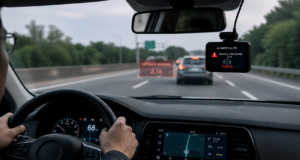
When the system detects a potential conflict, it can alert drivers through dashboard notifications, visual warnings, or audible alerts.
Unlike traditional navigation systems that depend on cellular networks, V2V communication is designed to operate with minimal delay. Speed is critical because many crash situations develop within seconds.
Common Accidents V2V Technology May Help Prevent
Rear-End Collisions
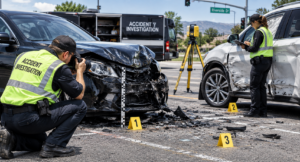
Rear-end crashes remain one of the most common types of vehicle accidents. V2V communication can alert drivers when traffic ahead is slowing rapidly, even if the braking vehicle is not yet visible.
Intersection Crashes
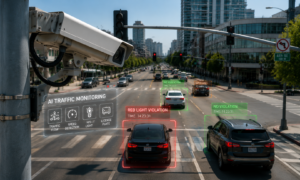
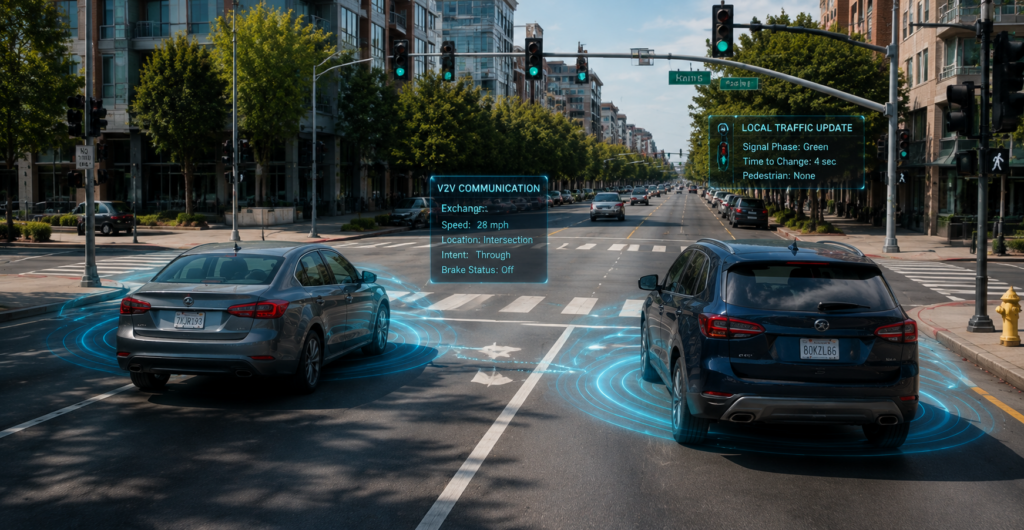
Intersections present numerous conflict points where vehicles cross paths. Connected vehicles can exchange location and movement data to identify potential collision risks before drivers recognize the danger.
Blind Spot Incidents
Although many modern vehicles include blind-spot monitoring systems, V2V communication can provide additional awareness by sharing information between vehicles that may not be visible through mirrors or sensors alone.
Lane Change Crashes
Connected vehicles can notify drivers when another vehicle is approaching rapidly from behind or traveling in an adjacent lane.
Benefits Beyond Individual Drivers
The advantages of vehicle-to-vehicle communication extend beyond individual motorists.
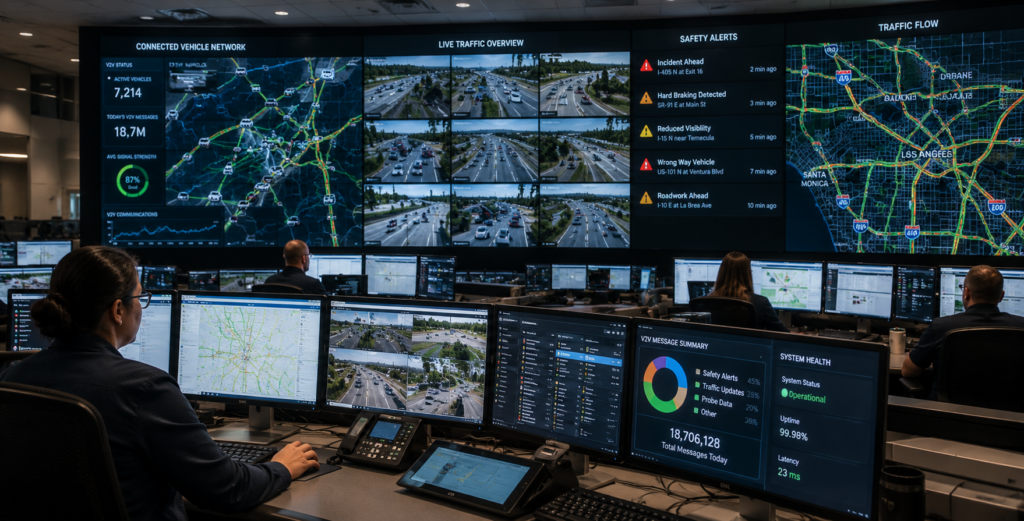
Traffic management agencies may use connected vehicle information to improve traffic flow and identify hazardous conditions more quickly. Emergency responders could potentially receive earlier notification of crashes. Roadway planners may gain valuable insights into traffic patterns and safety risks.
The Federal Highway Administration continues to explore connected vehicle technologies that support safer and more efficient transportation systems.
The Role of Vehicle-to-Infrastructure Communication
Vehicle-to-vehicle communication is often discussed alongside vehicle-to-infrastructure communication, or V2I.
Vehicle-to-infrastructure systems allow vehicles to communicate with traffic signals, road signs, construction zones, and traffic management centers.
For example, a connected traffic signal could notify drivers that a light is about to change. Construction zones could transmit warnings about lane closures ahead. Combined with V2V communication, these systems create a broader connected transportation network.
The U.S. Department of Transportation provides ongoing updates regarding connected vehicle research through its official transportation technology programs.
Challenges Facing Connected Vehicle Adoption
While the technology offers significant promise, several challenges remain.
Vehicle Compatibility
For maximum effectiveness, a large percentage of vehicles must participate in the network. Benefits increase as more vehicles become connected.
Privacy Concerns
Some drivers have concerns regarding data collection and vehicle tracking. Industry developers continue working to ensure safety information is transmitted without revealing personal identity information.
Infrastructure Costs
Expanding connected vehicle systems may require investments in roadway infrastructure and communication equipment.
Cybersecurity
Protecting vehicle communications from unauthorized access remains a priority. Manufacturers and regulators continue to develop safeguards designed to maintain system integrity.
How Automakers Are Responding
Many major automakers are investing heavily in connected vehicle technologies. Some manufacturers are incorporating communication capabilities into newer vehicle platforms, while others are testing advanced systems through pilot programs.
The automotive industry increasingly views connected vehicle communication as an important component of future safety strategies.
Organizations such as the Society of Automotive Engineers continue developing standards that support interoperability among different vehicle manufacturers.
How Connected Vehicles Complement Existing Safety Systems
Vehicle-to-vehicle communication is not intended to replace existing safety technologies. Instead, it works alongside them.
Current systems such as:
- Automatic emergency braking
- Lane departure warnings
- Adaptive cruise control
- Forward collision alerts
- Blind spot monitoring
can become more effective when enhanced by information received from surrounding vehicles.
The Insurance Institute for Highway Safety continues evaluating technologies that may contribute to crash reduction and improved driver awareness.
What Drivers Can Expect in the Coming Years
Connected vehicle technology is expected to expand gradually over the next decade. As more vehicles enter the market with communication capabilities, drivers may begin experiencing increased safety alerts and greater situational awareness.
Future systems may provide earlier warnings about roadway hazards, disabled vehicles, traffic congestion, and dangerous weather conditions.
While fully connected transportation networks are still developing, many industry experts view vehicle-to-vehicle communication as one of the most promising safety innovations currently under development.
Final Thoughts
Vehicle-to-vehicle communication represents an important step toward safer roads. By allowing vehicles to exchange critical information in real time, connected vehicle technology has the potential to reduce common crash scenarios, improve driver awareness, and support smarter transportation systems.
Although widespread adoption may take time, ongoing investments from automakers, transportation agencies, and technology developers suggest that connected vehicles may play a growing role in accident prevention. As the technology evolves, drivers can expect new tools designed to help them make better-informed decisions and respond more quickly to hazards on the road.
For more car safety insights, explore our articles on vehicle maintenance and road safety and driving habits that help prevent accidents.