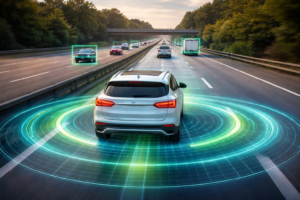
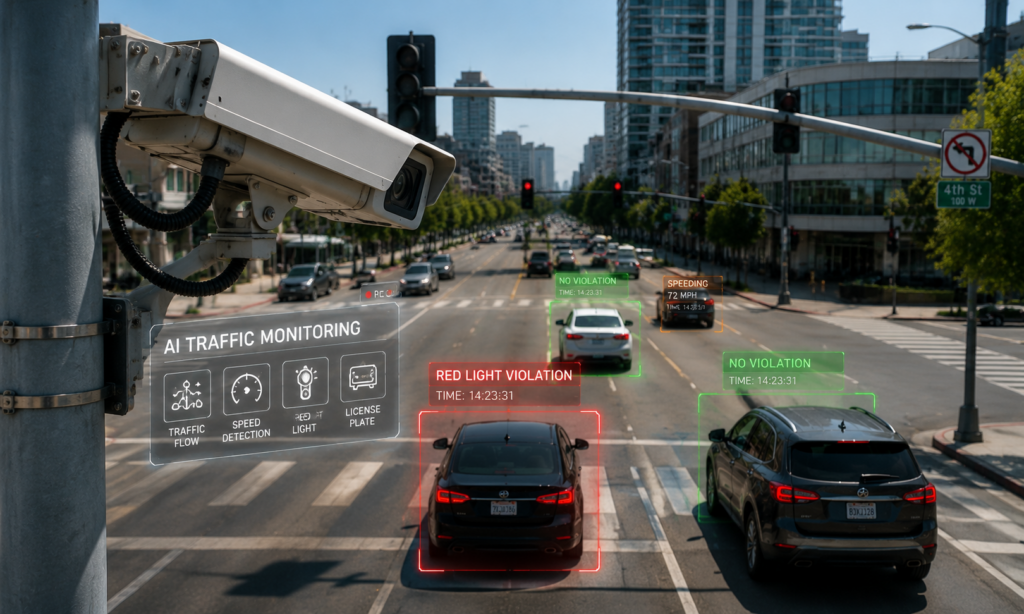
Across the United States, AI-powered traffic enforcement cameras are rapidly changing how car accidents are recorded, analyzed, and judged. In 2026, cities are increasingly relying on artificial intelligence systems to detect speeding, red-light violations, reckless driving, and even near-miss collisions. These systems are not just issuing tickets—they are becoming critical sources of evidence in car accident liability cases.
As these technologies expand, drivers, insurers, and legal professionals are adapting to a new reality where machine-generated data plays a major role in determining fault after a crash.
If you’re interested in how emerging technology is reshaping accident documentation, you may also want to read our related article on vehicle-to-vehicle communication safety systems.
What Are AI Traffic Enforcement Cameras?
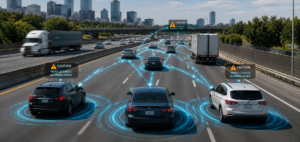
AI traffic enforcement cameras are advanced monitoring systems that use artificial intelligence to detect and analyze traffic violations in real time. Unlike traditional red-light or speed cameras, these systems can interpret complex driving behavior using computer vision and machine learning.
According to the National Highway Traffic Safety Administration, automated enforcement technologies are increasingly being used to improve roadway safety and reduce high-risk driving behavior.
These systems can identify:
- Speeding vehicles
- Red-light violations
- Unsafe lane changes
- Tailgating and following too closely
- Distracted driving behaviors
How AI Cameras Affect Car Accident Liability
One of the biggest impacts of AI traffic enforcement cameras is their growing role in determining fault after a crash. In many cases, footage and data collected by these systems are being used as evidence in insurance claims and court proceedings.
For example, if an AI camera records a driver running a red light just seconds before a collision, that footage can strongly influence liability decisions. This is especially important in states that follow comparative negligence laws.
You can learn more about how fault is evaluated in crashes in our post on what happens after a car accident in California.
AI Evidence in Accident Investigations
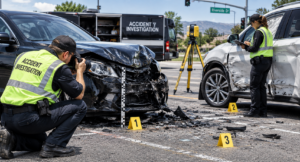
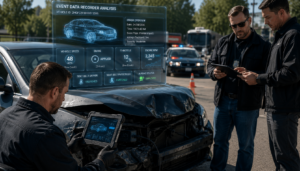
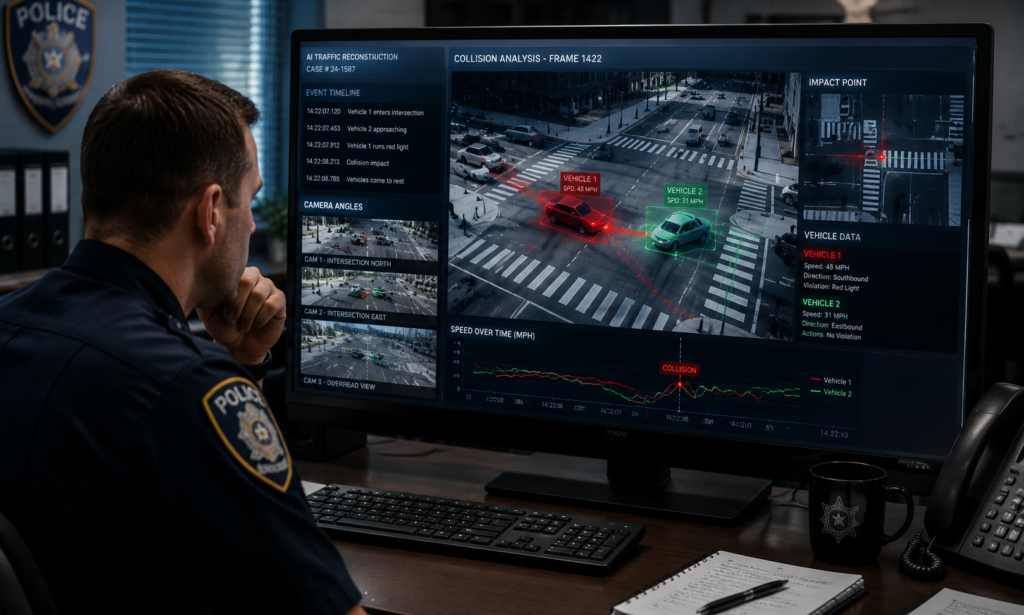
Modern accident investigations now frequently include multiple forms of AI-generated data. This includes traffic camera footage, vehicle telemetry, and even predictive traffic analytics.
Law enforcement agencies and insurance companies are increasingly relying on this data to reconstruct accidents with greater accuracy.
According to the Insurance Institute for Highway Safety, automated enforcement systems can reduce dangerous driving behaviors and improve accountability on the road.
In many cases, AI footage is now considered more reliable than eyewitness testimony, which can often be inconsistent or incomplete.
Common Scenarios Where AI Cameras Influence Fault
1. Intersection Collisions
AI cameras installed at intersections can detect signal violations and turning patterns, making it easier to determine which driver had the right of way.
2. Highway Rear-End Crashes
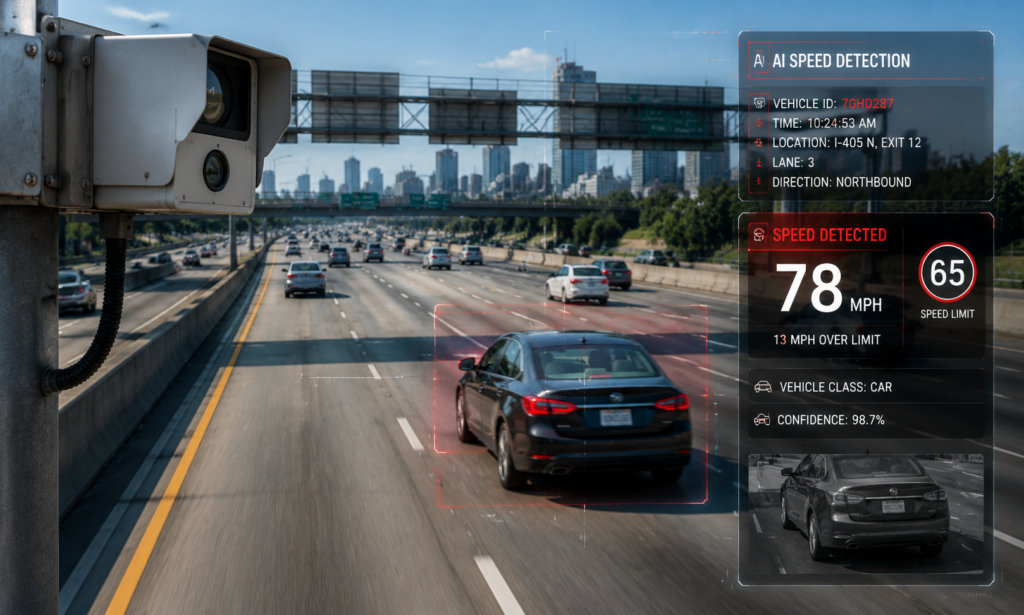
Speed detection and lane monitoring systems can show whether a driver was following too closely or braking too late.
3. Hit-and-Run Incidents
AI systems can track vehicle movement before and after a collision, helping identify fleeing drivers.
4. Pedestrian Accidents
Advanced detection systems can record whether a driver failed to yield in crosswalk zones.
Privacy and Legal Concerns
While AI traffic enforcement cameras improve safety, they also raise important privacy concerns. Critics argue that constant monitoring may lead to excessive surveillance of drivers.
Organizations like the American Civil Liberties Union (ACLU) have raised questions about how long footage is stored and who has access to it.
Other concerns include:
- Data storage and misuse
- Potential false positives in AI detection
- Limited transparency in algorithm decision-making
Balancing safety and privacy remains one of the biggest challenges in implementing AI traffic enforcement systems.
How Insurance Companies Are Using AI Camera Data
Insurance companies are increasingly integrating AI traffic camera data into their claims evaluation processes. This allows them to verify accident details faster and more accurately.
In some cases, insurers may even request AI footage before approving claims. This trend is changing how settlements are processed and how liability is assigned.
Experts suggest that this shift could reduce fraudulent claims while also speeding up legitimate compensation cases.
The Future of AI Traffic Enforcement
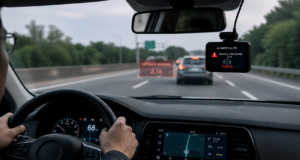
In the coming years, AI traffic enforcement is expected to become even more advanced. Future systems may include predictive crash prevention, where AI not only records violations but also warns drivers in real time before accidents happen.
According to the Federal Highway Administration, smart infrastructure and connected traffic systems are key priorities for improving road safety nationwide.
Emerging technologies may also integrate with autonomous vehicles, allowing cars to communicate directly with traffic enforcement systems and infrastructure.
Key Takeaways for Drivers
- AI traffic cameras are increasingly used as legal evidence in accident cases
- They can strongly influence liability and insurance decisions
- Privacy concerns continue to be debated
- Technology is making accident investigations faster and more accurate
Drivers should be aware that traffic enforcement is no longer limited to human observation. Artificial intelligence now plays a major role in monitoring road behavior and documenting crashes.
Conclusion
AI traffic enforcement cameras are transforming how car accidents are investigated and how liability is determined. While they offer clear benefits in terms of safety and accountability, they also raise important questions about privacy and fairness.
As this technology continues to evolve, drivers, insurers, and legal professionals must adapt to a system where digital evidence is often the deciding factor in accident claims.
Staying informed about these changes is essential for understanding your rights and responsibilities on the road in 2026 and beyond.